

Stretch the Fabric. Not Your Tolerances.
VFD synchronization that keeps every roller exactly where it belongs.
Stenter frames are the critical path in textile finishing—determining dimensional stability, fabric weight, and surface quality. A single motor drifting by even 0.5% creates visible defects: bowed weft lines, uneven dye uptake, and selvedge tearing. Generic VFDs with basic speed following cannot maintain the microsecond‑level coordination required across 8 to 14 independent drive sections. Drawing…
Why Your Fabric Comes Out Wrong
- We shold know the pain point! -
A 0.3% error at zone 2 becomes 1.5% by zone 8. The result: overfeed distortion, bowed weft lines, and fabric that fails dimensional specifications.
During acceleration and deceleration ramps, tension loops between adjacent rollers oscillate. Without active damping, peak forces exceed fabric tensile limits—ripping edges and stopping production.
Different fabric constructions require different stretch percentages. Manual parameter entry across multiple drives invites configuration errors that scrap entire runs before operators notice.
Stenter chains and roller bearings expand as oven temperatures stabilize. Fixed speed setpoints don't account for this—causing gradual tension drift through the production day.
Synchronization So Tight You'll Forget It's Electronic
- How We Solve It? -
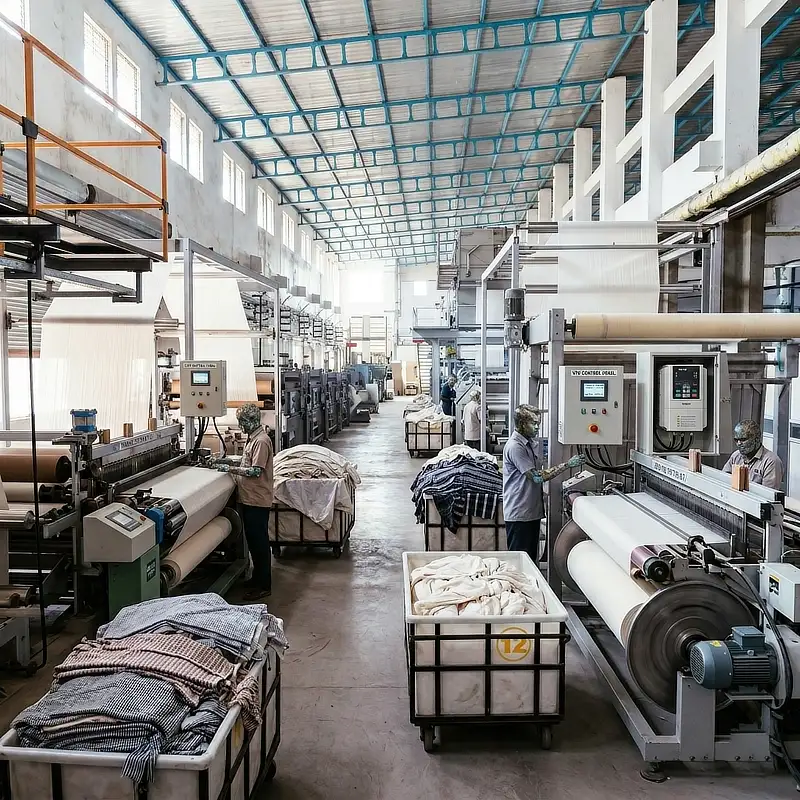
We eliminate multi‑zone speed drift through a deterministic fiber‑optic or high‑speed RS‑485 synchronization bus that updates speed references every 500 microseconds across all drives—maintaining inter‑zone speed ratios within ±0.02% of commanded values regardless of load changes or thermal conditions. Our closed‑loop tension trimming algorithm continuously monitors motor torque signatures to detect incipient selvedge stress, automatically applying micro‑trim corrections to adjacent drive speeds before fabric damage occurs. Draw ratio and overfeed parameters are entered once at the master HMI and automatically distributed to all drives with range‑of‑motion validation, eliminating per‑drive configuration errors. Integrated flying start capability re‑synchronizes drives seamlessly after emergency stops, while our PWM optimization reduces motor acoustic noise in the 2–8 kHz range—critical for operator comfort in finishing plants.
Four Reasons Your Reject Rate Drops
- Our products advantage -

±0.02% Inter‑Zone Speed Accuracy
Deterministic synchronization bus maintains speed ratios across all drive sections regardless of load or temperature variation—eliminating weft bow and dimensional rejects.

Active Tension Damping
Torque‑based tension monitoring applies micro‑corrections before selvedge stress exceeds fabric limits. Edge tears and pinhole defects drop measurably.

Centralized Recipe Management
Single‑point entry of draw ratios and overfeed percentages. All drives receive validated parameters simultaneously—no more misconfigured zones.
Flying Start After E‑Stops
Seamless re‑synchronization after emergency stops or power interruptions. Production resumes without manual re‑threading or tension recalibration.
Recommend Products
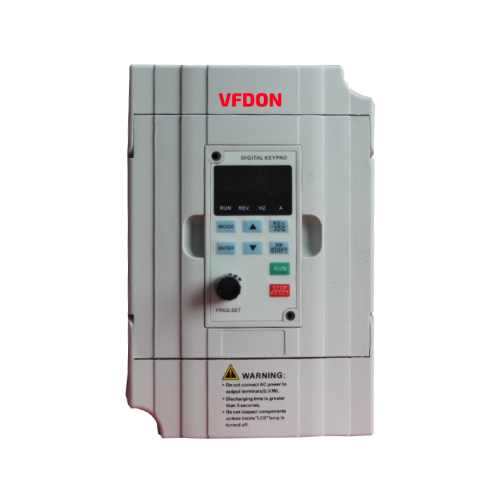
VDN60 Series
Ultra-Compact Sensorless Vector VFD | 0.4kW – 2.2kW AC Drive
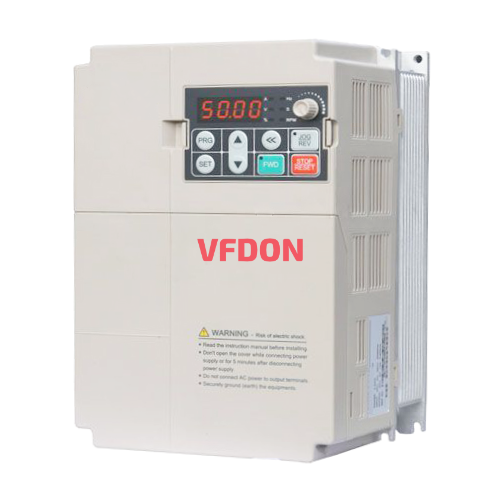
VDN300 Series
Universal High-Performance Current Vector VFD | 0.75kW – 560kW AC Drive
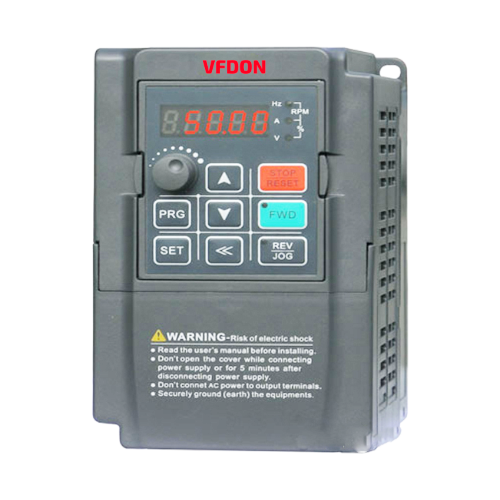
VDN110 Series
High-Performance V/F Control VFD | 0.75kW – 2.2kW Compact AC Drive
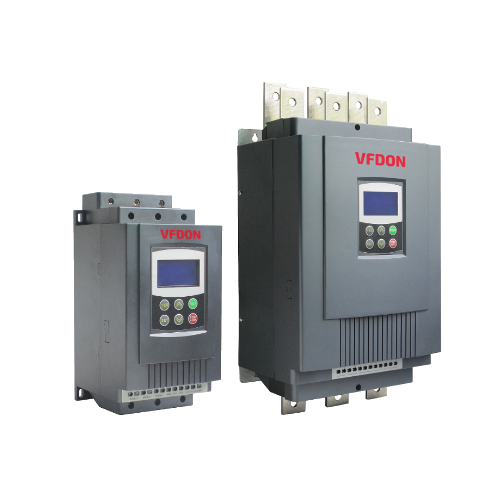
VSS Series
Intelligent Digital Motor Soft Starter | Advanced Starting & Protection for AC Motors